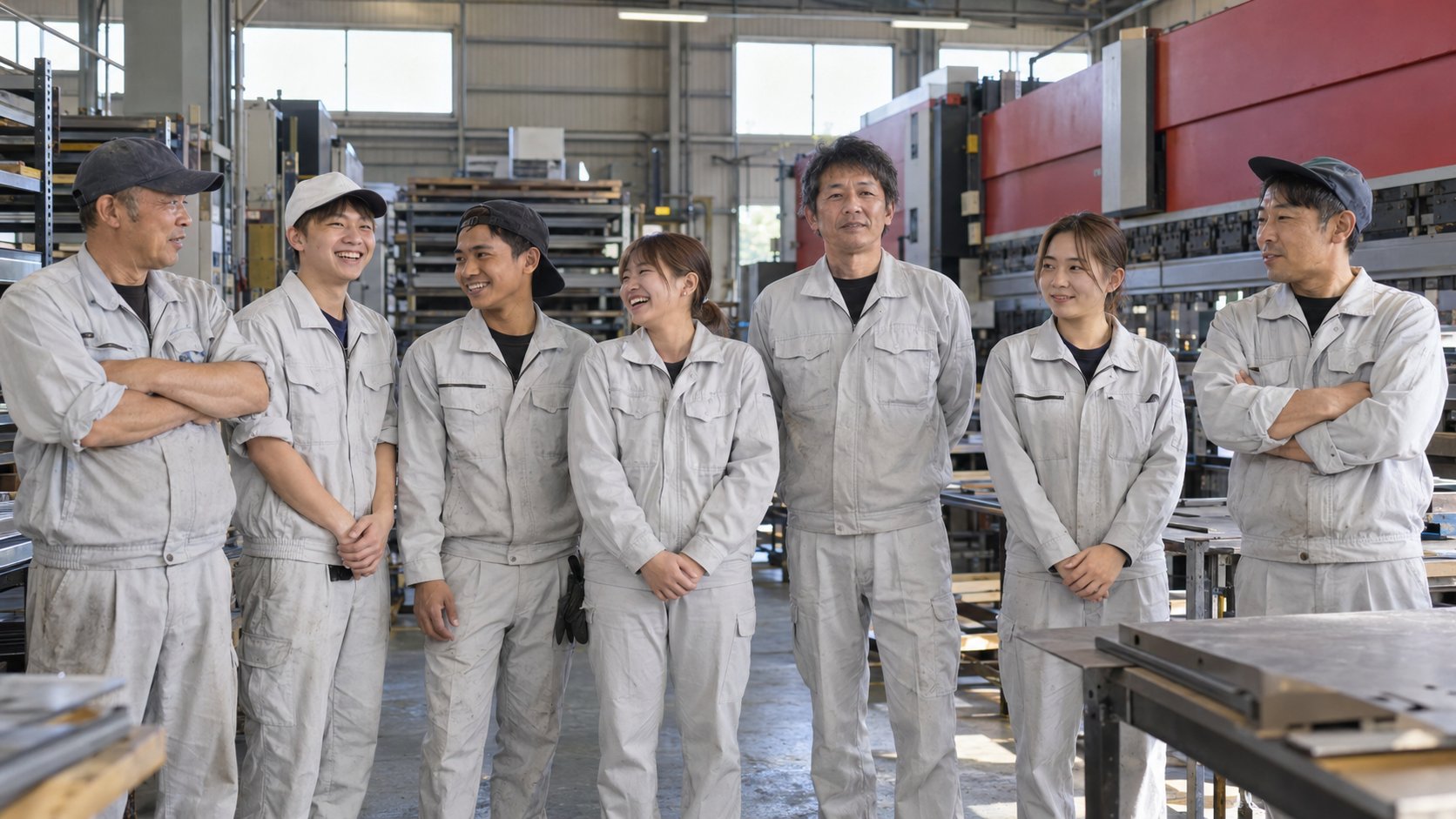
We cut, bend, weld, and paint steel sheets.
We make covers for machine tools.
Our company has 36 staff.
- Days off a year
- 118days
- Overtime
- about12hours a month
- Training and tests
- We pay
- Dormitory
- ¥10,000a month
This is a fictional company created as a design sample.
Choose a job. See a day at work.
Each job shows a day at work, the steps to become skilled, the qualifications and training we pay for, and words from a coworker.
A day at work
- 8:00Morning meeting (5 min). Hear about today’s urgent jobs.
- 8:05Read the drawing and change the tools on the press brake (the bending machine). We call this setup “dandori.”
- 8:40Bend one test piece. Measure the angle and the size.
- 9:00Bend the same shape, piece after piece.
- 10:00Break (10 min)
- 10:10Pick up sheets cut by the laser. Set up for the next drawing.
- 12:00Lunch (60 min)
- 13:00More bending. Before sending parts to welding, check the hole positions against the drawing.
- 15:00Break (10 min)
- 15:10New staff watch a senior do the setup and take notes.
- 16:45Put the tools back on the shelf. Sweep the floor.
- 17:00Finish
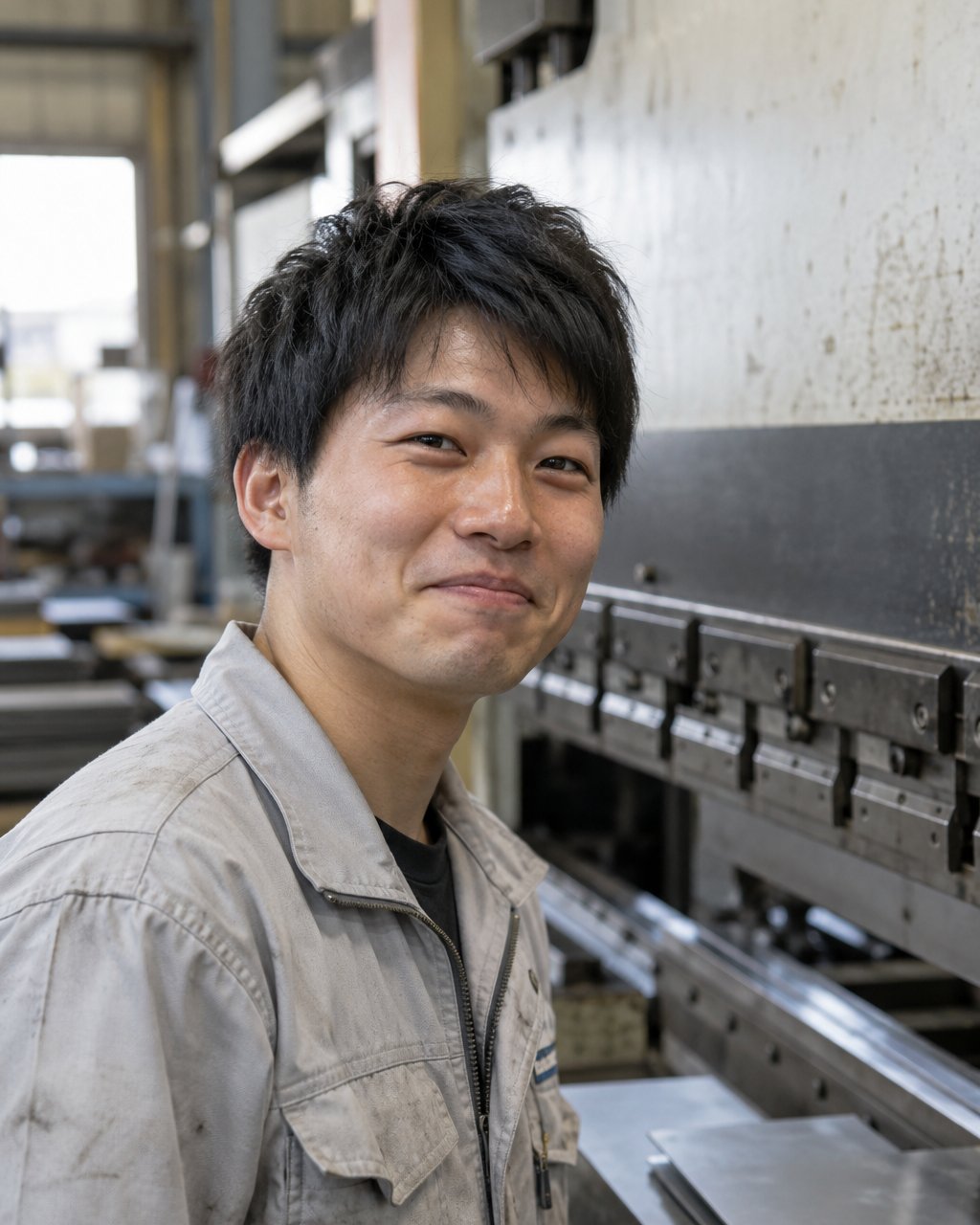
From a coworker
“I bent it to 90 degrees, but it came back to 92. In my first month, fixing those 2 degrees took the whole day.”
Steps to become skilled
Year 1
Bend simple shapes on a machine a senior has set up. Learn to measure with calipers.
Year 3
Read drawings and choose the bending order and tools yourself. Learn to run the laser cutter.
Year 5
Make box-shaped covers with more than 10 bends. Teach setup to new staff.
Qualifications and training
- National Trade Skill Test: Factory Sheet Metal (machine sheet metal work), Grade 2 and 1
- Crane-load rigging course (tamakake)
- Crane training (under 5 tons)
- Forklift license course
We pay for the courses and tests. You get paid on course days, too.
You cut steel sheets with a laser machine and bend them into shape.
Pay and how to applyA day at work
- 8:00Morning meeting (5 min).
- 8:05Set the parts from sheet metal on a jig (a frame that holds parts in place).
- 8:30Tack weld (small dots to hold the parts). Measure the size.
- 9:00Full welding. Steel with semi-automatic welding, stainless steel with TIG welding.
- 10:00Break (10 min)
- 10:10Fix parts bent by the heat, with a hammer and a torch.
- 12:00Lunch (60 min)
- 13:00For repeat parts, load the welding robot. Then grind the weld lines (beads).
- 15:00Break (10 min)
- 15:10Before sending parts to painting, check the welds for cracks and holes.
- 16:45Close the gas valves. Clean the torch tips.
- 17:00Finish
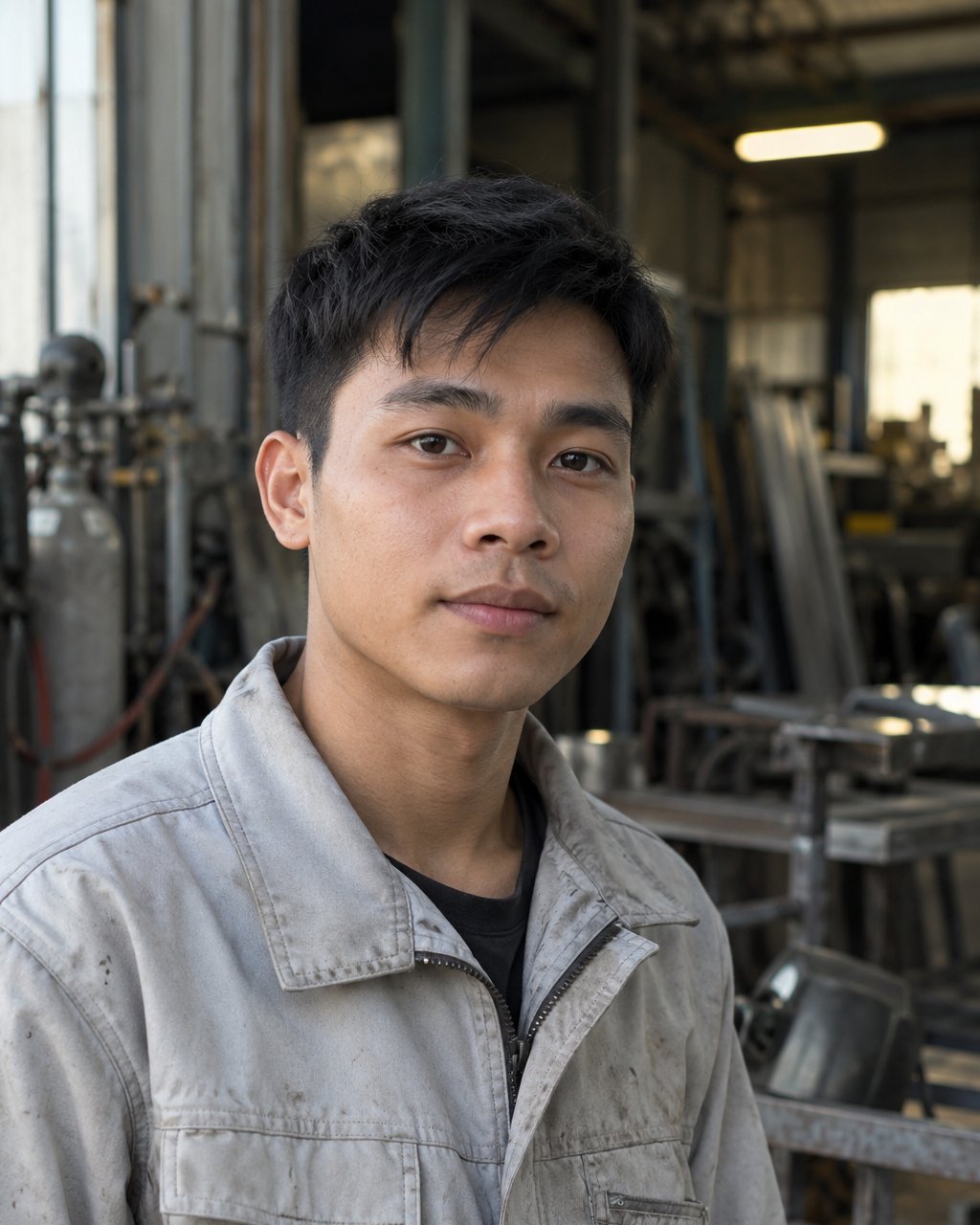
From a coworker
“If stainless steel gets too hot, it turns purple. I watch the color and change how fast I move my hand.”
Steps to become skilled
Year 1
After arc welding safety training, weld steel plates lying flat. Tack welding and grinding, too.
Year 3
Weld vertical and horizontal joints. Start TIG welding on stainless steel.
Year 5
Weld thin stainless steel without bending it. Teach the welding robot new moves.
Qualifications and training
- Arc welding safety training
- JIS welder test, semi-automatic (SA-2F, then SA-2V and SA-2H)
- JIS welder test, stainless steel TIG (TN-F)
- Crane-load rigging course (tamakake)
We pay for the courses and tests. You get paid on course days, too.
You join bent sheets with heat and make them into boxes.
Pay and how to applyA day at work
- 8:00Morning meeting (5 min).
- 8:05Turn on the curing oven. While it heats up, hang the parts on hangers.
- 8:30Cover holes and screw threads that must not be painted (masking).
- 9:30Spray powder paint in the booth (powder coating).
- 10:00Break (10 min)
- 10:10Put the painted parts in the oven. Bake at 180°C for about 20 minutes.
- 12:00Lunch (60 min)
- 13:00Put cooled parts next to the color sample. Check the color under the lamp we always use.
- 14:00For small orders, spray liquid paint with a spray gun.
- 15:00Break (10 min)
- 15:10Measure the paint thickness with a gauge.
- 16:45Clean the gun and hoses. Turn off the oven.
- 17:00Finish
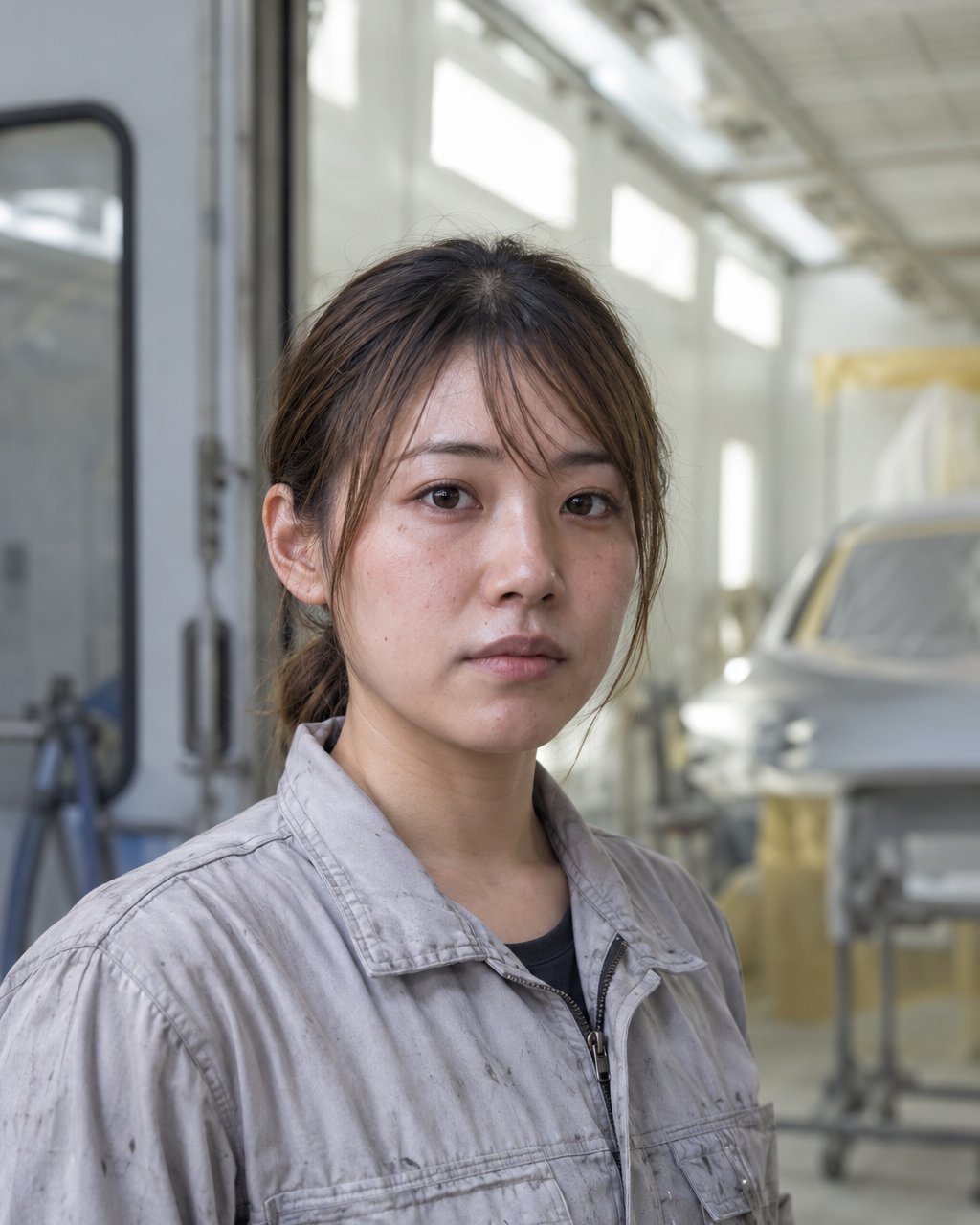
From a coworker
“The same gray looks different when the light changes. So I always compare it with the sample under the same lamp.”
Steps to become skilled
Year 1
Masking, hanging, and oven work. Watch seniors paint and learn the gun distance and speed.
Year 3
Paint evenly, even inside the corners of boxes. Keep color records.
Year 5
For a new color, start with test pieces and match the customer’s color sample.
Qualifications and training
- Organic solvent safety leader course
- National Trade Skill Test: Painting (metal painting work), Grade 3 and 2
- Forklift license course
We pay for the courses and tests. You get paid on course days, too.
You spray paint on finished covers and bake them in an oven.
Pay and how to applyA day at work
- 8:00Morning meeting (5 min). Hear about defects found yesterday.
- 8:05Check the list of parts to ship today.
- 8:15Measure with calipers and a tape measure. Compare with the drawing.
- 10:00Break (10 min)
- 10:10Under bright lights, look for scratches, uneven paint, and dust.
- 11:00Pack parts with corner pads, boxes, or wooden frames.
- 12:00Lunch (60 min)
- 13:00Load the trucks with a forklift.
- 15:00Break (10 min)
- 15:10Enter the results on the computer. If there is a defect, send a photo to the person who made it.
- 16:30Line up tomorrow’s parts in the shipping area.
- 17:00Finish
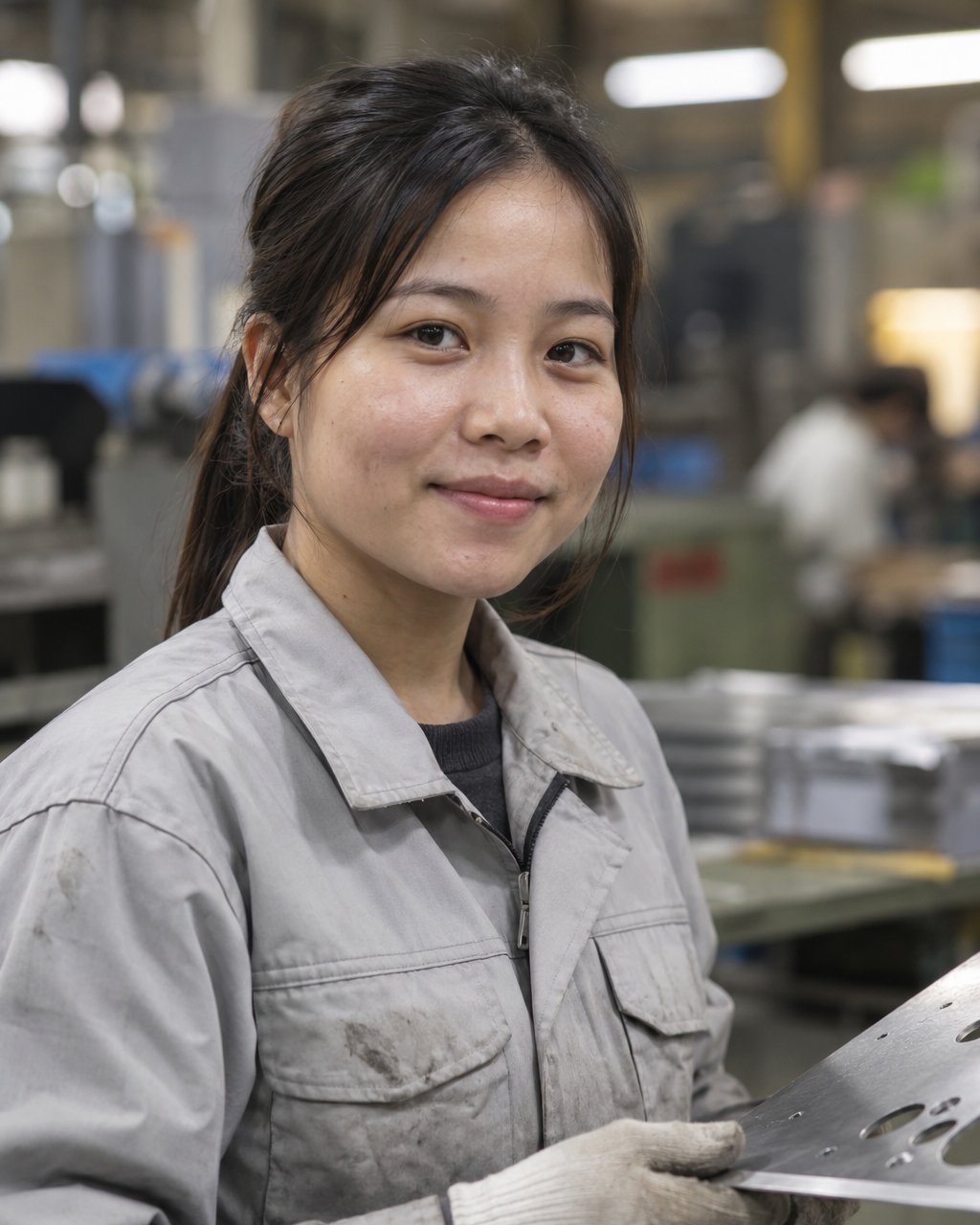
From a coworker
“You can read the numbers on a drawing without Japanese. The first things I learned were the symbols on drawings.”
Steps to become skilled
Year 1
Measure with calipers and a tape measure. Pack parts and drive a forklift.
Year 3
Read tolerances (how much size difference is OK) and decide pass or fail.
Year 5
When a defect happens, find the cause with the other teams. Talk with the customer’s quality staff.
Qualifications and training
- Forklift license course
- Crane-load rigging course (tamakake)
- National Trade Skill Test: Machine Inspection (machine inspection work), Grade 3 and 2
- Quality Control Certificate, Level 3
We pay for the courses and tests. You get paid on course days, too.
You measure finished parts against the drawing, check for scratches, and load them on trucks.
Pay and how to apply4 of our 36 coworkers come from Vietnam.
They work in welding, inspection, and sheet metal. Here is what you may want to know before you apply.
- Status of residence
- You need a status of residence that allows this work. Our 4 coworkers from Vietnam have the Specified Skilled Worker (i) status of residence in the industrial product manufacturing field. We help you with the papers for the immigration office.
- Japanese
- At work we use simple Japanese. JLPT N4 is a guide, not a requirement. During the factory visit, we check that we can talk about safety in Japanese. Drawings use many numbers and symbols. We teach you how to read the lines, dimensions, and tolerances. Hung can help you in Vietnamese.
- Pay
- You get the same pay as Japanese staff in the same job: ¥200,000–¥260,000 a month (base pay + job allowance). You also get allowances in months when you meet the conditions.
- Dormitory
- ¥10,000 a month. You pay for the electricity, gas, and water you use. A room for one person: 6 tatami (about 10 m²), with a kitchen and a bathroom. 5 minutes by bicycle to the factory.
- Time and days off
- 8:00–17:00. 118 days off a year. No night shifts. No rotating shifts.
- Shopping
- Toyohashi is about 20 minutes by car. It has shops with Asian food. Coworkers often drive there together on days off.
“If stainless steel gets too hot, it turns purple. I watch the color and change how fast I move my hand.”
Nguyen Van Hung · Semi-automatic and TIG welding · 8th year · From Hai Phong, Vietnam
“You can read the numbers on a drawing without Japanese. The first things I learned were the symbols on drawings.”
Tran Thi Lan · Measuring and packing · 6th year · From Nam Dinh, Vietnam
One month of pay in your first year
¥229,968
Year 1, no experience (welding), in a month with no lateness or absence, 12 hours of overtime. Before tax. Sample figure.
Your monthly pay is ¥200,000–¥260,000 (base pay + job allowance). Allowances are added only in months when you meet the conditions.
| Base pay | ¥190,000 |
|---|---|
| Job allowance | ¥10,000 |
| Monthly pay (base + job allowance) | ¥200,000 |
| Full attendance allowance (no lateness or absence this month) | ¥10,000 |
| Overtime (12 hours) | ¥19,968 |
| Total this month (before tax) | ¥229,968 |
Come and see the factory before you apply.
Weekdays, 10:00–16:00. It takes about 30 minutes. You can walk through the factory in your own clothes. Decide after the visit.